Robot Tech News

Select a story to read its summary and three key points. Dates follow the sources.

Photo: ASUS

Humanoid · ASUS

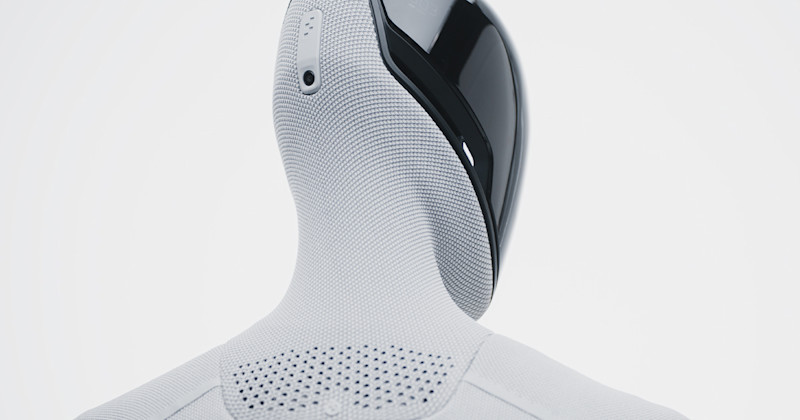
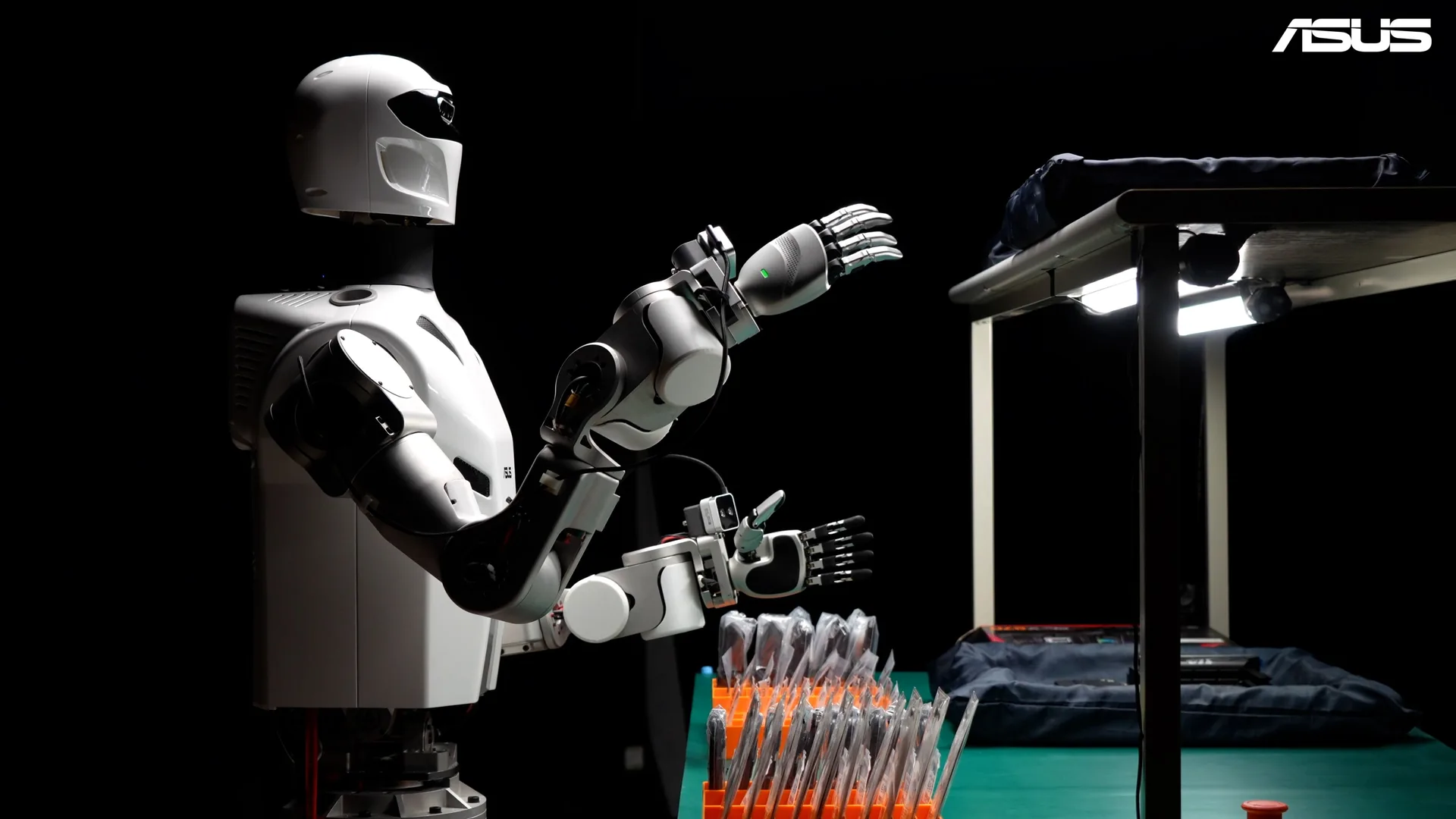
ASUS unveils Gallop, its first humanoid, packing motherboard accessories at a group factory

ASUS on November 13 published an official Pressroom post introducing Gallop, its first humanoid robot, from the Humanoid Robotics business unit of its Physical AI Solutions group. The company said Gallop today works from a fixed base with two arms at a motherboard-accessory packing station in an ASUS group EMS factory. It said the station has 15 small parts, many in thin, clear bags, and takes about 20 seconds per board for a person. ASUS said its target is 99.5% success within 20 seconds, the same standard it holds a person to; that figure is a company target, not a verified result. The post said Gallop learns mainly by watching skilled workers (who wear a head camera with their consent) and through VR-guided practice and simulated variations, and that all of this runs on a single NVIDIA Jetson AGX Thor computer inside the robot. ASUS said the program started in early 2026, and that over the coming year it plans to bring its own dexterous hand into the robot, put Gallop on wheels, and show it to customers at Computex 2027, with customer pilots planned for 2027 and market availability targeted for the second half of 2028. Those dates, and later moves into hospitals and service sites, are company plans.
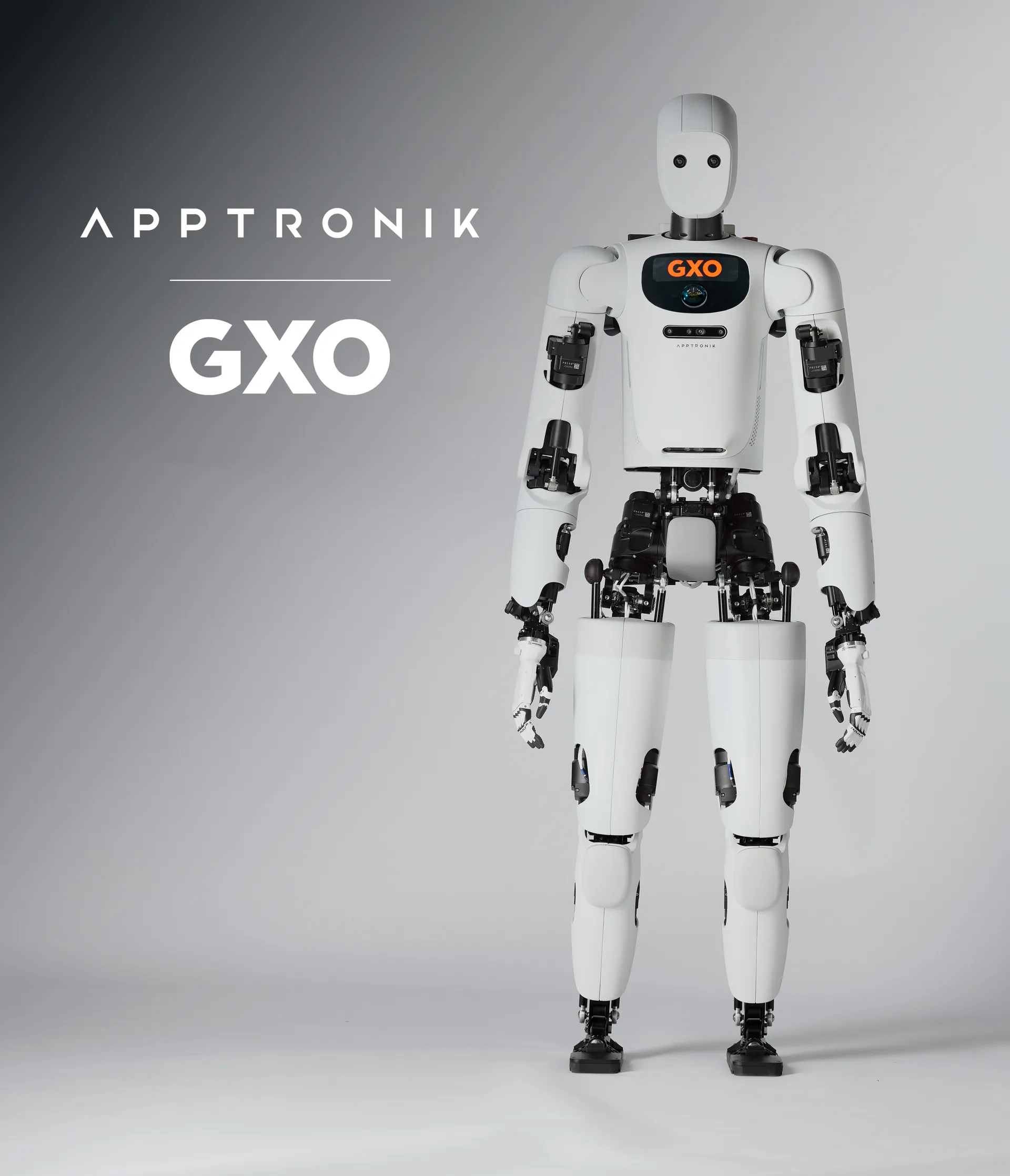
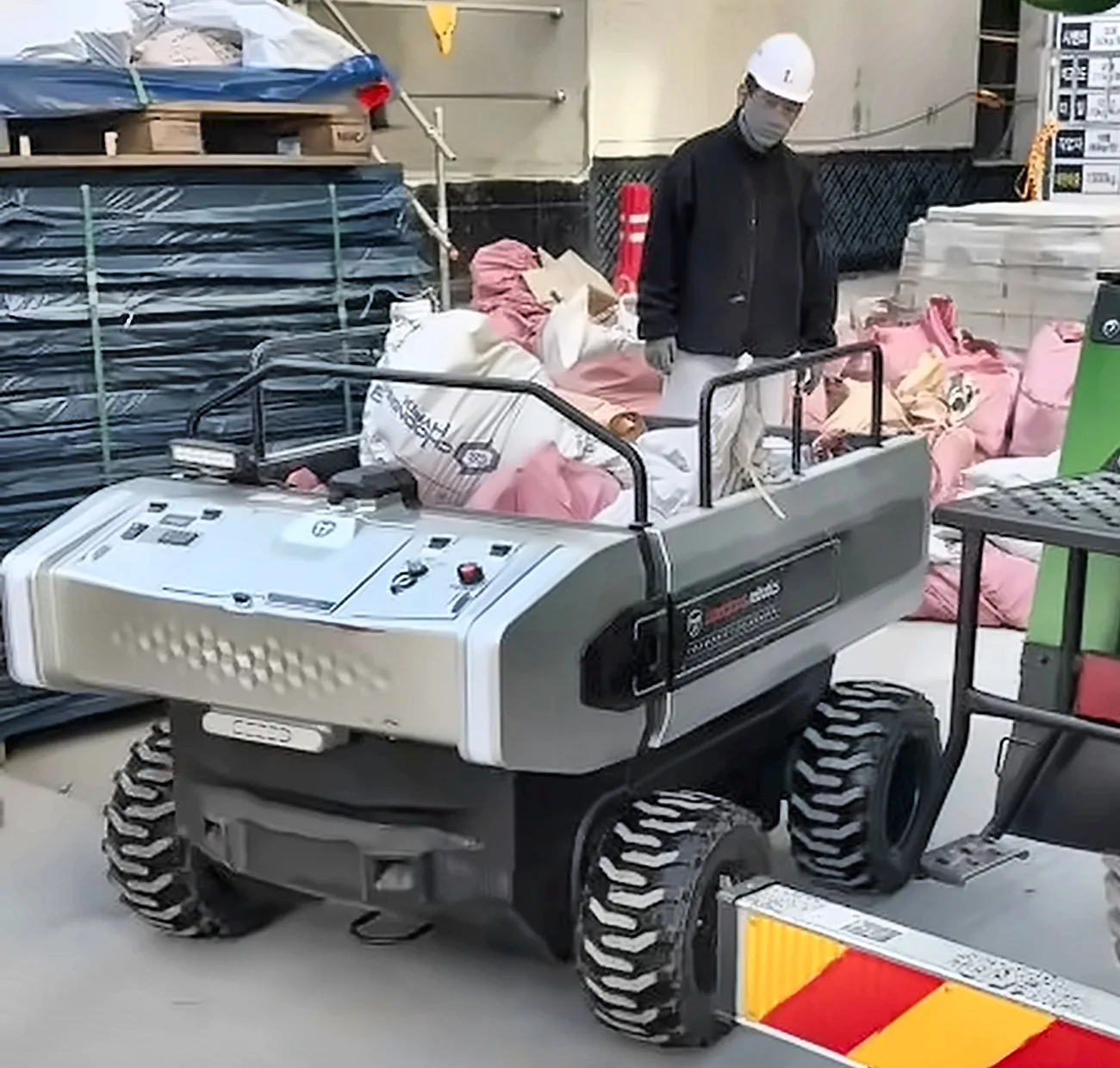
Photo: GXO / Apptronik

Humanoid · GXO · Apptronik

GXO and Apptronik sign LOI to expand Apollo warehouse trials, intending up to 1,000 robots if KPIs are met

GXO Logistics said in an official newsroom release on November 12 that it had signed a letter of intent (LOI) with Apptronik to expand development of Apollo humanoid technology for deployment at scale. Under the agreement, the companies will expand joint trials of Apollo in live warehouse operations, including goods-to-person and person-to-goods picking, case and tote movement, packing and sortation. GXO said the trials, beginning in 2027, will validate safety, security and technical requirements for scaled deployment, with each use case assessed against jointly agreed productivity, safety and operational KPIs, and will show how humanoids can work alongside existing automation and GXO team members. Subject to the success of the deployments and the ability to meet those KPIs, the companies intend to progress toward a global rollout of up to 1,000 Apollo robots over the next four years, with initial deployment in North America in late 2027. The commercial framework is expected to follow a robotics-as-a-service (RaaS) structure. The 1,000-robot figure and timetable are a stated intention, not a firm order. GXO said the partnership began in 2024 with a proof-of-concept program; earlier this year Apollo completed a U.S. pilot focused on autonomous picking of small consumer goods; and the companies have conducted data collection and live autonomous evaluations on more than 50 logistics tasks at Apptronik's Robot Park.

Photo: 대동로보틱스

Construction robotics · 대동로보틱스 · GS건설

Daedong Robotics completes an RT100 material-transport proof of concept with GS Engineering & Construction

Daedong said in an official news post on November 12 that its subsidiary Daedong Robotics had completed a proof of concept (PoC) of the RT100 construction-site material-transport robot with GS Engineering & Construction (GS건설). After a memorandum of understanding in June, the companies ran a pre-check on a GS건설 test track and then conducted the PoC from October 7 to 30 at a large apartment construction site in the western Seoul metropolitan area, Daedong said. The robot used was the production-model RT100 TS, carrying materials for masonry, plastering, mechanical/electrical/plumbing (MEP) and finishing work. Daedong said workers responded well to the follow-me function (TFS) and wireless remote control; that assessment is the company's account, and no quantitative results were published. Kim Gyu-beom, head of Daedong Robotics' robot development division, was quoted as saying the trial had confirmed the feasibility of applying a material-transport robot on site, and that the company would continue work on indoor and outdoor autonomous navigation, autonomous loading and unloading, a robot in the 1-ton-plus class, a fleet-management system, and a robotics-as-a-service (RaaS) model. Those follow-on functions and the 1-ton-class and RaaS plans are not results of this PoC.

Photo: Amazon / Ring

Security robotics · Ring

Ring announces Ring Robotics: Rover Cam for businesses ships in the U.S. on December 16

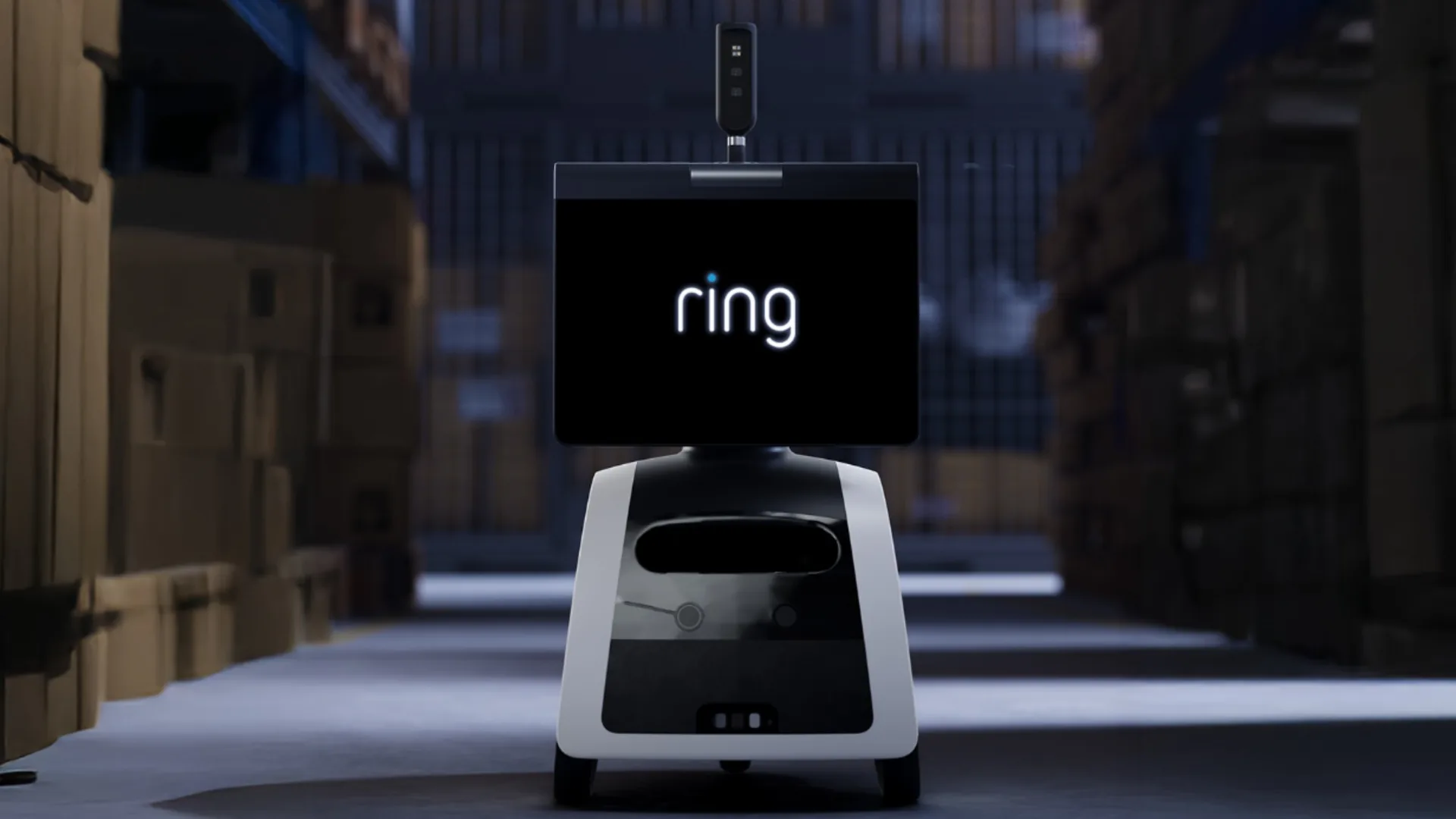
Amazon said in an official About Amazon post on November 10 that Ring is launching Ring Robotics with two robots: Ring Drone Cam, a flying indoor security camera, and Ring Rover Cam, an autonomous security robot designed for business. Both are powered by AI Pilot, which the company described as a custom system that maps the space, suggests patrol points, and navigates around obstacles. The post said Ring Rover Cam will begin shipping to customers in the U.S. on December 16, 2026, for $999.99, and Ring Drone Cam will begin shipping to customers in the U.S. on January 27, 2027, for $249.99. A compatible Ring Protect plan is required, the post said. It also stated that Ring Drone Cam has not been authorized as required by the rules of the Federal Communications Commission, and that the device is not, and may not be, offered for sale or lease until that authorization. Ring said Drone Cam has a 148-degree field of view, can rotate 360 degrees, and records 2K video, and that Rover Cam streams in up to 4K video.

Robot AI · manufacturing · Google DeepMind · Apptronik · Mercedes-Benz

Google DeepMind unveils Gemini Robotics 2.5; Apollo 2 kits parts on Mercedes-Benz lines at a 96% success rate, the lab says

Google DeepMind on November 10 introduced Gemini Robotics 2.5, its latest vision-language-action model for robots. It said it partnered with Apptronik and Mercedes-Benz to run Apptronik's Apollo 2 humanoid on active production lines in Kecskemét, Hungary, and Sindelfingen, Germany, for automotive kitting — sorting parts from bulk bins into trays in the order needed for each vehicle. DeepMind reported a 96% success rate in this proof of concept (lab/company figure). The model is rolling out to robotics partners, and the lab says it evaluated the system across more than 200 tasks, including tool use and handling deformable objects. Claims of a 30% to 100% higher success rate and 20% to 30% faster completion than previous baselines are DeepMind's own evaluations.

Humanoids · manufacturing · Embodied AI

EPFL spin-off Embodied AI unveils AIR, a wheeled factory humanoid with light tendon-driven arms

Embodied AI, a start-up founded by robotics researchers at EPFL, has unveiled AIR, a two-armed wheeled humanoid for factory floors, at Humanoid Europe 2026 in Munich, the Greater Geneva Bern area (GGBa) reported on November 9. Heavy components, including motors, gearboxes and electronics, sit in the torso, while the arms are light, tendon-driven and designed to yield on contact with a person or an obstacle. The company says wheels rather than legs make the robot more stable on flat factory floors. An operator controls AIR at the start of each job and every run is recorded as training data; Embodied AI says the robot can typically perform the task on its own within about a month (company claim). It was designed under the ISO/TS 15066 collaborative-robot safety specification, and CE marking is planned for 2027.

Humanoids · research · Boston Dynamics

Boston Dynamics puts Atlas on wheels as a research testbed for whole-body learning, not as a product

Boston Dynamics said in an official blog post on November 9 that it swapped the feet on its Atlas humanoid for wheels to test a learned whole-body controller. The company says a wheeled Atlas is not a product but a research testbed. The only new part is a custom adapter that mounts an off-the-shelf scooter rim on the existing ankle actuator; in software each wheel is modeled as an ankle that can spin continuously. The aim was to see how faithfully a learned controller works with real actuators when the motors have to deliver high torque and high speed under load. Some moves, including side dashes and a 360-degree jump, came from human motion-capture trajectories and the training pipeline; the engineer who wrote the post said the 360-degree jump worked on the first try (company blog).

Delivery drones · logistics · Zipline · Walmart

Zipline raises $1.5 billion at a $21.5 billion valuation as Walmart adds 300 drone sites

Zipline said on November 5 that it has raised $1.5 billion at a $21.5 billion post-money valuation, in a round led by Paradigm, WCM Investment Management and Layer Global, with participation from Valor Equity Partners, Fidelity Management & Research Company, Uber, Tiger Global, J.P. Morgan, ARK Invest and Salesforce Ventures. The company says it will use the capital to expand U.S. manufacturing and hiring as it builds a nationwide drone delivery network. The same day, Walmart announced a new multi-year agreement with Zipline to add 300 drone delivery sites nationwide, with potential to expand further. Walmart said its drone delivery program has completed more than 2 million deliveries and is designed to deliver everyday essentials in as fast as 30 minutes where available (Walmart figures). Zipline said Uber is targeting one million deliveries a day with Zipline by 2029 (a target, not a current volume).

Photo: NASA / NASA Johnson Space Center (iss075e0263406)

Space robotics · NASA · CSA

NASA and CSA complete installation of the ISS's eighth and final roll-out solar array, with Canadarm2 supporting the spacewalk

NASA said that on November 5, Canadian Space Agency (CSA) astronaut Joshua Kutryk and NASA astronaut Anil Menon finished a 6-hour, 59-minute spacewalk in which they installed and deployed the eighth and final International Space Station Roll-Out Solar Array (IROSA) on the 3B channel of the station's starboard truss. The NASA space station blog said that completed the power-augmentation work, and that together the roll-out arrays increase the station's power-generation capacity from 160 kilowatts to approximately 215 kilowatts. The same post said astronauts had completed 18 spacewalks to prepare equipment and install the eight arrays. NASA's November 4 blog said Menon was to carry the array while attached to the Canadarm2 robotic arm, and a CSA article on November 5 said NASA astronauts Luke Delaney and Jessica Watkins manoeuvred Canadarm2 from inside the station to help the pair, with robotics operators in Houston and Longueuil monitoring the arm. NASA said the spacewalk was Menon's fifth and Kutryk's second, and the 286th spacewalk in support of station assembly, maintenance and upgrades.

Industrial robots · regulation · ABB · SoftBank

China prohibits SoftBank's purchase of ABB Robotics' China business; both firms say talks continue

ABB said on November 5 that SoftBank Group had been informed by China's Office of the Working Mechanism for Foreign Investment Security Review that it had prohibited the acquisition of the ABB Robotics business in China. SoftBank's November 6 release says it received that notification on November 4. ABB restated that in October 2025 it agreed to divest its Robotics division to SoftBank for an enterprise value of $5.375 billion. The transaction remains subject to regulatory approvals and customary closing conditions. Both companies said they are in close dialogue and are working constructively on the transaction. The prohibition is described as applying to the China business; neither release says the global deal has been called off.

Photo: Caltech / Momentus

Space robotics · Caltech · DARPA

Caltech says its DARPA NOM4D robot assembled a truss section in space without astronauts

The California Institute of Technology said in an official news post on November 5 that a robotic truss builder conceived, designed and built by Caltech researchers and funded by DARPA's Novel Orbital and Moon Manufacturing, Materials, and Mass-efficient Design (NOM4D) program had successfully built a structure in space without the help of astronauts. The builder is part of Caltech's Autonomous In-Space Tensioned Reflector Assembly (ASTRA) demonstration, an autonomous manipulator that picks up struts and joints from nearby dispensers to assemble identical bays of a perimeter truss. Sergio Pellegrino, the project lead, said, “This is the first time that a structure has been autonomously constructed in space.” Caltech said ASTRA has been working to construct a 1.4-meter-diameter reflector antenna from composite fiber tubes, aluminum joints and a Kapton reflective surface, and that the payload reached low Earth orbit on March 30, 2026, as one of 10 payloads on Momentus's Vigoride 7, launched on SpaceX Transporter-16 from Vandenberg Space Force Base. The payload carried two prebuilt bays and an arm-like manipulator; once in space the prebuilt bays were pushed out and assembly of the third bay was carried out, the article said. It also said the team ran into time limitations and was only able to build the initial section of the antenna, that the ASTRA truss is complete when 11 bays are finished, and that with the mission ending in December it appears unlikely the demonstration will complete the full truss assembly.

Humanoids · AI data · KIMM · ETRI · MSIT

KIMM and ETRI open Korea's first 'AI Humanoid Data Factory', collecting task data with 12 humanoids

A KIMM-led strategic research group on self-growing AI humanoids, working with ETRI, has built an 'AI Humanoid Data Factory' at KIMM headquarters and opened it on November 3. The institute describes it as Korea's first data facility dedicated to bipedal humanoids. It currently runs 12 humanoid robots; people teleoperate the robots through tasks, and the resulting motion and task data are recorded for AI training. The opening included demonstrations of household tasks such as taking items from a fridge, handling laundry and tidying a sofa, as well as in-car button and lever operation, plus precise object manipulation and whole-body motion imitation by the domestic KAIROS humanoid. KIMM plans to open the facility to industry, academia and research institutes in stages from the end of 2027, with support from the Ministry of Science and ICT linked to its K-Moonshot AI humanoid mission.

Logistics robots · funding · Tutor Intelligence · a16z

MIT CSAIL spinout Tutor Intelligence raises $75 million Series B led by a16z, training warehouse robots with remote 'tutors'

Tutor Intelligence, a robotics company that started out of MIT CSAIL, said on November 2 that it has raised a $75 million Series B led by Andreessen Horowitz (a16z). The figure appears on Tutor's newsroom and homepage banner, and a16z published a same-day note saying it is leading the round. Tutor deploys robots into production before full autonomy and uses remote human operators ('tutors') so that real work data can train its foundation models. Its robot worker Cassie is a single-arm machine for case picking and palletizing or depalletizing; Sonny is a two-arm robot aimed at e-commerce each-picking. The company says customers do not buy the robots up front and instead pay by the hour or by the pick. a16z says Tutor plans to have more than 1,000 robots under contract by the end of 2027 (a plan, not a completed result).

Weekly briefing · SICOROBO

Weekly briefing: Commitments, policy findings and robot investment in numbers

Five stories from 26 October to 1 November: Walmart and Symbotic’s warehouse-automation commitment, Agility’s expected listing proceeds, the U.S. Section 232 finding on imported robots, A3’s Q3 North American robot-order statistics and FASSTO Robotics’ picking-robot subscription. Commitments, expectations and company-reported figures are distinguished from completed payments and results.

Policy · testbed · 서울특별시 · 서울대학교

Seoul and Seoul National University to build a 'Physical AX Center' with a 2027 living lab for everyday robots

Seoul Metropolitan Government said on November 1 that it signed a physical AI MOU with Seoul National University on October 30 and will set up a 'Physical AX Center' at the Seoul AI Hub. The city will provide 612 m² on the fourth floor of the hub's main centre, while SNU will run everyday-robot testing and support startups using its research. The first project is a 'Life Companion living lab' resembling real homes, with living room and kitchen spaces, to be ready by the first half of 2027; from the second half it will test muscle-assist, mobility-assist, wearable, care and serving robots for performance, safety and user acceptance. SNU's H-PAIR national lab, funded with up to KRW 100 billion in government money over up to 10 years, is taking part, and SNU plans to support testing for about five startups a year. Care-site demand projects start with one pilot in 2027.

Industrial robots · AI · HD Hyundai Robotics · Palantir

HD Hyundai Robotics works with Palantir on physical AI, cutting robot-program issue resolution from 21.5 to 7.9 days

HD Hyundai Robotics said on November 1 that it is advancing physical AI solutions with US AI software company Palantir. CTO Ahn Seong-hwan gave a keynote at Palantir's Sovereignty Bootcamp in New York, outlining the collaboration. AI agents analyse existing robot programs and propose improvements, which field engineers then refine from experience. The company says that since August, using AI agents in problem solving cut average task time from 21.5 days to 7.9 days (about 63%), and it expects robot programming costs to fall by more than 50% (company figures). The cost saving is an expectation; the two firms plan a regular executive steering committee to find more use cases.

Robot AI · Korean company · KRAFTON · Ludo Robotics

KRAFTON's Ludo Robotics presents Ludi 0.2, robot AI aimed at understanding people

Ludo Robotics, the robotics subsidiary of PUBG maker KRAFTON, presented Ludi 0.2, its robot intelligence system, at the 2026 Bay Area Robotics Symposium (BARS) at UC Berkeley on October 30. The company says Ludi 0.2 improves social intelligence (reading intent, feedback and social cues), memory and reasoning, coordination of navigation and manipulation, gesture interpretation and movement (company claims). No performance figures or robot hardware details were released. Ludi 0.1, introduced in August, paired a vision-language model with navigation and manipulation skills; Ludi 1.0, a foundation model unifying perception, dialogue and action, is in development. Ludo is headquartered in Palo Alto with an R&D lab in Seoul and is led by KRAFTON CEO CH Kim.

Humanoid · funding · Agility Robotics

Agility Robotics completes merger with about $465 million raised, begins Nasdaq trading as AGLT on November 5

Agility Robotics, maker of the Digit humanoid, and SPAC Churchill Capital Corp XI said on October 30 that gross capital raised through their business combination and related financings was expected to be about $465 million before transaction expenses, comprising about $164 million from Churchill XI's trust account, about $201 million from a $10-per-share common stock PIPE led by Foxconn, and $100 million of equity funding already received. Agility later said the merger closed on November 4, and on November 5 it began trading on Nasdaq under AGLT (common stock) and AGLTW (warrants). The November 5 release restates that the combination and related financings provided approximately $465 million in gross capital before transaction expenses. Agility has said it plans Digit 5 deliveries to early-access customers in the first half of 2027 and general availability by end-2027 (company claims).

Logistics automation · Symbotic · Walmart

Walmart commits about $6 billion more to Symbotic warehouse robotics, expanding to 25 US distribution centers

Symbotic, an AI-enabled supply-chain robotics company, and Walmart announced on October 29 (US time) an expanded commercial agreement. Symbotic automation will be added at 25 US regional distribution centers, with further opportunities across Walmart's global supply chain. The agreement includes an initial commitment of approximately $6 billion in spend over several years across multiple locations. According to Symbotic's SEC 8-K filing, $125 million of that funds research and development of next-generation racking and related picking, process-flow and inventory-management capabilities. Walmart says the systems will increase storage capacity and improve product flow and replenishment (company claims). It is an unusually large single-customer commitment in warehouse robotics.

Humanoids · industrial robots · AGIBOT

AGIBOT proposes 'Worken' robot productivity measure and launches G2 Max

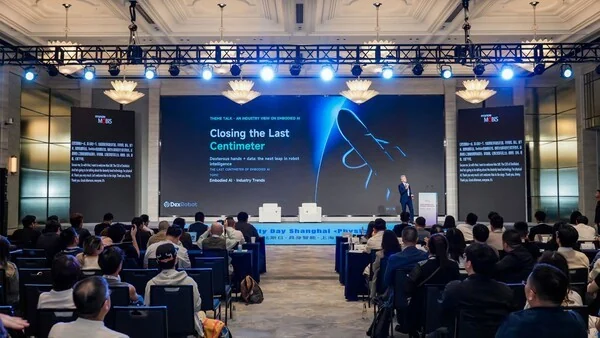
AGIBOT proposed Worken, a measure of productive robot work, at its Innovation Day 2026 in Shanghai on October 29. The company defines it as active robots × autonomous working hours × output efficiency ratio, shifting focus from units built or shipped to useful work done on site. It also unveiled the AHA3 humanoid hardware architecture, the GO-3 Preview foundation model and the WITA-Omni interaction model, and launched the G2 Max industrial robot (21 DoF, dual-arm handling up to 40 kg, 0.1–2.5 m working height) and Link-U OS 1.0. Worken is a company proposal, not an industry standard, and benchmark rankings are company-reported. Link-U OS is in trials with selected partners, with full open sourcing planned by the end of 2026.

Policy · trade · The White House

US finds robotics and industrial machinery imports threaten national security, orders negotiations instead of tariffs

On October 28, US President Donald Trump signed a Section 232 proclamation concurring with the Commerce Secretary's finding that imports of robotics, industrial machinery and their parts and components threaten to impair US national security. The proclamation says the US relies on foreign imports for most types of robotics and industrial machinery and their components. No tariffs were imposed. Instead, the Commerce Secretary and the US Trade Representative are directed to negotiate agreements with trading partners and report progress within 180 days; the President may take other actions later. Because parts and components are included, robot and component exporters, including Korean firms, will need to watch the negotiations.

Policy · public-sector robots · 산업통상부

Korea holds public-sector robot briefing ahead of 2027 rollout plan

South Korea’s Ministry of Trade, Industry and Energy held a briefing on wheeled and quadruped robots for public-sector use at SETEC in Seoul on October 28–29. Nine public-sector demand organizations and eleven robot companies discuss operational requirements. The government plans to introduce about 1,700 AI robots in the public sector in 2027; that figure is a plan, not completed deliveries.

Medical robots · research · MIT

MIT develops a soft robotic enteroscope that crawls through the small intestine

MIT researchers developed a snake-inspired, tube-like soft robotic enteroscope, reported in Science Robotics. Four-chamber actuators let it extend and bend, while kirigami-patterned sleeves grip the slippery intestinal lining. It carries a camera, a drug sprayer and biopsy clips, and travelled about six and a half feet through the small intestine in animal studies. It remains research; no human use is reported.

Industrial robots · market · A3

A3: North American robot orders rose 24.8% in Q3 2026, the strongest quarter of the year

North American companies ordered 10,989 robots valued at $723.5 million in Q3 2026, according to the Association for Advancing Automation (A3). Orders rose 24.8% in units and 26.1% in value year on year, the strongest quarter of the year so far. Automotive component (+90.4%) and semiconductor/electronics (+97.6%) orders surged, and collaborative robots rose about 56% to 1,831 units. The figures are A3's order data; A3 named input costs and trade uncertainty as factors to watch.

Robot AI · soft gripper research · KIST · CloSer consortium

KIST joins European CloSer soft robotics research project

ChosunBiz reports that KIST is joining the European Horizon CloSer project to develop an integration of soft grippers and vision AI. The report describes 15 institutions across nine countries; consortium member TG0 also lists KIST and describes a 42-month project. Field validation and broader applications are research plans, not completed commercial deployment.

Photo: 파스토로보틱스 · VentureSquare 제공 사진

Warehouse robots · subscription service · FASSTO Robotics

FASSTO Robotics launches subscription service for warehouse picking robots

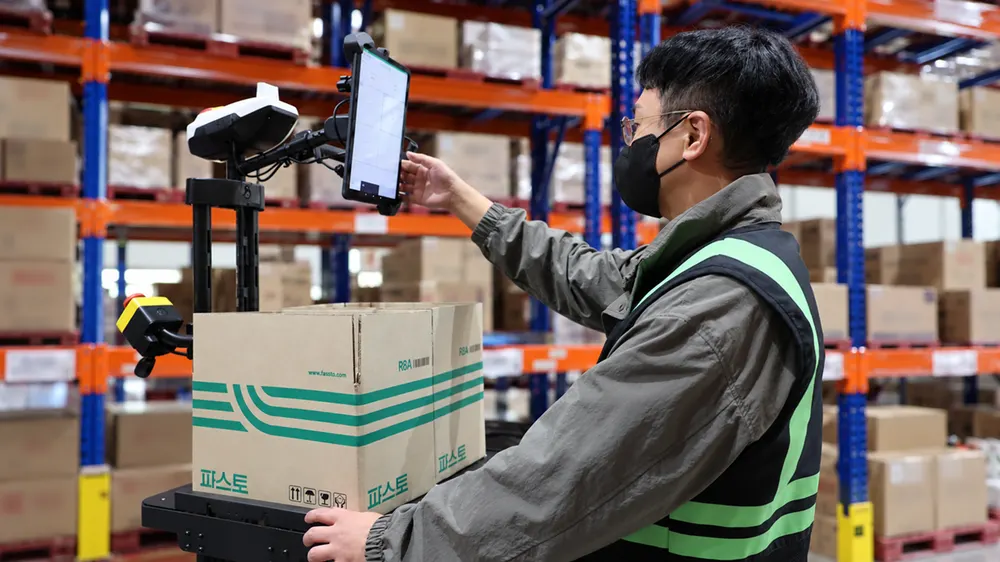
VentureSquare reports that FASSTO Robotics launched a subscription service combining FX100 and BX100 picking-assistance mobile robots with its FASSTO Brain warehouse execution software. The company says that at its own Yongin logistics center, worker travel fell below half and throughput in the same time rose to about three times the previous level. Those are company-reported results for one site; customer outcomes and installation timing can differ. The monthly subscription price was not disclosed.

Industrial automation · logistics · BMW · Embotech

BMW and Embotech report one million automated in-plant vehicle moves

BMW and Embotech reported one million automated vehicle movements across four BMW Group plants in Germany and the UK. External sensors, cloud infrastructure and motion-planning software guide vehicles without drivers in defined production and logistics areas. The companies report about 3,500 movements daily. This is an in-plant operating figure, not public-road autonomy or a robot production count; deployment at Spartanburg is planned for 2027.

Industrial inspection · quadruped robots · ANYbotics

ANYbotics starts customer deliveries of ANYmal X inspection robot

On October 27, Swiss robotics company ANYbotics announced the start of customer deliveries of ANYmal X, a legged inspection robot designed for explosive atmospheres in oil, gas and chemical facilities. The company says it is shipping to customers including Equinor and DSM-Firmenich and describes connecting autonomous inspection findings with maintenance workflows. Its figures for more than 50 customers and over 120,000 inspections a month describe the broader operating system and are not presented as ANYmal X-only results.

Robotics industry · investment plans · Wonik Robotics

Wonik Robotics plans investment in Wanju robot manufacturing site

Electronic Times reports that Wonik Robotics signed an investment agreement with Jeonbuk Province and Wanju County and plans to invest about 100 billion won through 2029 in a manufacturing site. The proposed facility would include robotic hand, mobile manipulation and humanoid production facilities plus manufacturing AI data infrastructure, with operation targeted after 2029. The agreement and investment plan are not completed construction or production output.

Robot components & supply · ROBOTIS · Pollen Robotics

ROBOTIS signs XL330 actuator supply deal for Pollen's Microduck

ChosunBiz reported from the October 26 signing at ROBOTIS headquarters that ROBOTIS agreed to supply XL330 DYNAMIXEL actuators for Pollen Robotics' small biped Microduck. The report puts the initial supply at about 750,000 actuators for 50,000 robots, consistent with 15 actuators per Microduck. The 750,000 figure is reported as the initial requested/supply volume; next year's 1 million is expected demand, not confirmed shipments.

Humanoids · social robots · Realbotix

Realbotix opens reservations for its Echo social humanoid line

Realbotix announced its Echo humanoid line for companionship, education and wellness and opened reservations with a $199 deposit. The two models are Echo Tabletop (17 degrees of freedom, $11,950) and Echo Full Body (39 degrees of freedom, $59,950); the first run is 225 Tabletop and 25 Full Body units for delivery in the second half of 2027. Operation requires a monthly subscription starting at $19.99. Delivery timing and volumes are company plans, not completed deliveries.

Humanoids · logistics operations · GXO Logistics · Agility Robotics

GXO and Agility plan to expand Digit humanoid deployments

GXO and Agility Robotics announced an expansion of their Digit collaboration from an existing Georgia logistics site to GXO facilities in Statesville, North Carolina, and Lebanon, Tennessee. The e-commerce fulfillment deployments are expected to begin in early 2027, initially using Digit 4 and later migrating to Digit 5 when it becomes commercially available. GXO says Digit has moved more than 100,000 totes at the existing Flowery Branch site; the new-site deployments remain planned, not completed.

Humanoids · company plans · Yaskawa Electric · Tokyo Robotics

Yaskawa sets a humanoid product goal for the next 1–2 years

Robot Newspaper reported that Yaskawa's chairman said at an October 9 results briefing that the company wants to bring a certain level of AI-equipped humanoid to market within 1–2 years and expand product deployment around 2030. These are company goals, not a completed launch. The 1,615 mm height, 7 kg single-arm payload in the worst posture and torque sensors described in the same article are specifications of Tokyo Robotics' separate Torobo model, not confirmed specifications for Yaskawa's planned product.

Weekly briefing · SICOROBO

Weekly briefing: Robot AI moves closer to factories and real work

Five stories from 19–25 October: a larger ceiling on a U.S. Navy inspection contract, a planned humanoid pilot at an agricultural machinery plant, a robot-training centre, a compact on-device AI model and a dual-arm assembly demonstration. Contract ceilings, plans and company-reported claims are distinguished from completed payments, production and independent validation.

Robot AI · training data · NVIDIA GEAR

NVIDIA publishes three Flora models for annotating robotics video

Robot Newspaper reported that NVIDIA GEAR released three Flora models for segmenting actions in video and adding captions and outcome-reward labels. NVIDIA's project page says its own production data engine labels 200,000 hours per day using 512 GB300 GPUs. This is a company-reported annotation throughput, not newly collected robot-experience hours or an independently verified performance metric.

Robot developer ecosystem · PrimeBOT · 上纬启元

PrimeBOT announces its Qizai developer initiative for personal robots

PrimeBOT introduced its Qizai initiative for personal-robot developers on October 24. Its official portal links SDK documentation, shared capabilities and spaces for questions and practical work. The company also promotes co-creation through Q1's PrimeFLOW and PrimeToolkit; support scale, participation terms and the openness of each technology still require checking individually.

Robot AI research · DEEP Robotics

DEEP Robotics presents five research advances for robot prediction, action and memory

DEEP Robotics announced five research areas on October 24, connecting physical prediction, instruction following, policy learning, memory and evaluation. They cover DR-WM, a VLA model, policy optimization, dynamic memory and LynxScenes-based benchmarking. This is a research program, not a new robot sale; company-reported experiments do not guarantee performance in every deployment.

Robot news · Microbot Medical

Microbot plans SIR EDGE meetings on LIBERTY adoption

Microbot announced planned conference meetings with prospective LIBERTY customers on October 23. Its team intends to meet clinicians and hospital decision-makers at SIR EDGE and the concurrent ACIR meeting. This is an adoption outreach plan, not evidence of new contracts or clinical outcomes.

Robot components & sensors · MicroVision

MicroVision announces production of MOVIA Pro short-range lidar

MicroVision announced commercial production and order availability for MOVIA Pro on October 22. It describes onboard point-cloud perception and connectivity for industrial equipment, including AMRs and AGVs. Production and shipping are company-reported; no public price or independent robot deployment benchmark was established.

Robot components & tactile research · University of Michigan

Michigan researchers combine vision and touch in GelSlim 5.0

University of Michigan researchers propose GelSlim 5.0, a fingertip sensor with one camera and a UV-responsive contact layer. Switching illumination captures visual and tactile images sequentially; VisTacFusion estimates object pose and contact geometry. Validation covers 12 known objects within a session, not arbitrary moving objects or industrial deployment.

Photo: 로봇신문

Policy · 한국AI·로봇산업협회

Korean robotics forum outlines public deployment targets for 2030

At the October 21 parliamentary forum, an industry ministry official outlined an eight-ministry public deployment plan targeting about 1,700 robots in 2027 and 15,000 cumulatively by 2030. These are targets, not completed deliveries. KEIT's robotics program director described domestic actuator, sensor and hand R&D support; implementation requires follow-up program notices.

Photo: ACP research team · ETH Zurich · real-robot demonstration stills

Humanoid & robot AI research · ETH Zurich · ACP research team

ETH researchers plan body contacts to help humanoids cross obstacles

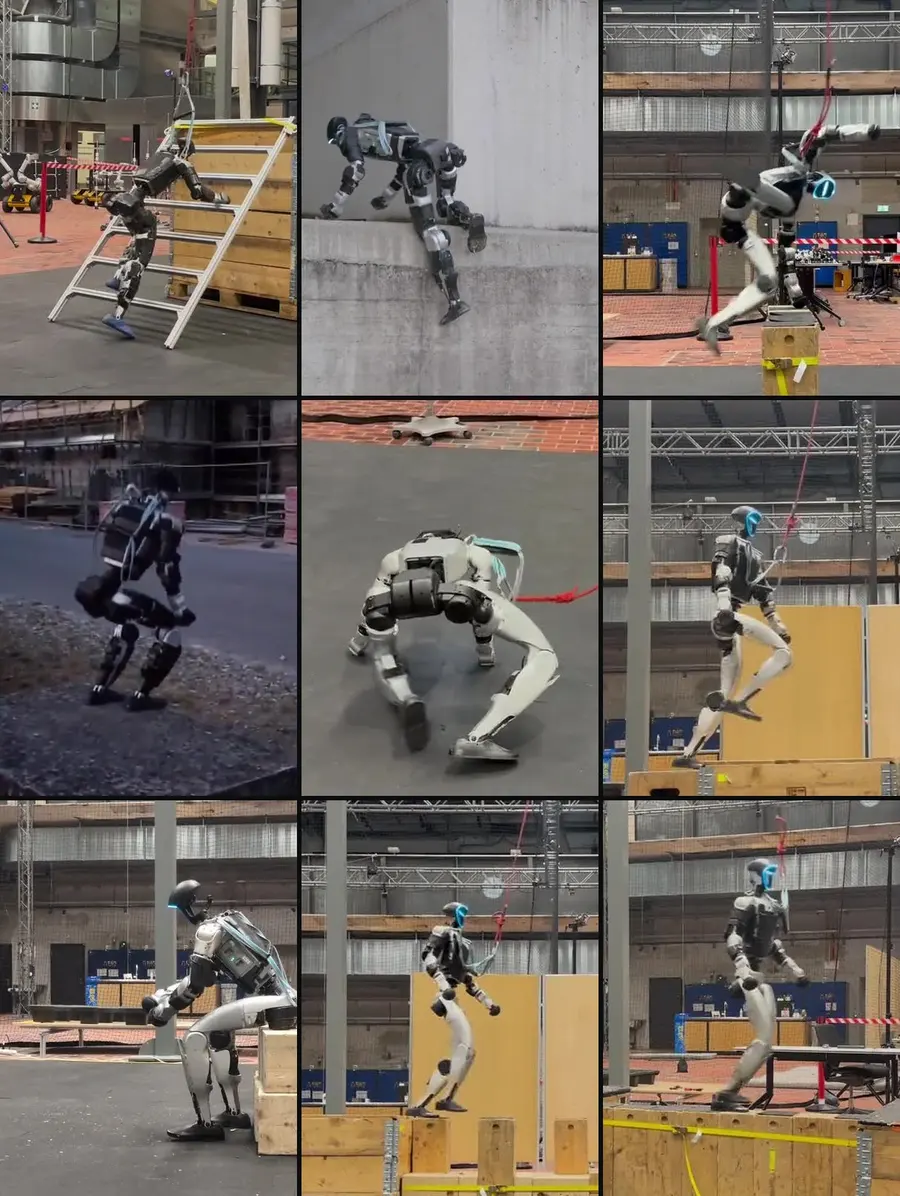
ETH researchers present ACP, which plans where a humanoid's body should contact terrain. A LiDAR-equipped Unitree G1 demonstrates ladder climbing, vaulting and getting up with one control policy. The preprint is under review; demonstrations do not establish autonomous work or safety across arbitrary environments.

Robot news · Agility Robotics

Digit 5 plans unified onboard compute with NVIDIA IGX Thor

Agility plans to standardize general-availability Digit 5 onboard compute on NVIDIA IGX Thor. Human detection and Halos integration support work ahead of final third-party certification. Early access is expected in the first half of 2027, rather than a completed mass rollout.

Humanoid · Tesla

Tesla reports early Optimus production in Fremont

Tesla's Q3 update reports that Optimus production has started in Fremont. The capacity table labels California robotics as early ramp. Hardware and manufacturing remain under iteration; this announcement does not establish high-volume customer deployment or proven workplace performance.

Humanoid · HD Hyundai Robotics

HD Hyundai Robotics presents upper-body dual-arm robot at ROBEX

HD Hyundai Robotics presented an upper-body robot with two arms and five-fingered hands at ROBEX in Daegu. It is developing a robot foundation model for task understanding, initially targeting parts sorting and assembly preparation. Enhanced force/tactile capabilities, a wheeled platform and eventual bipedal mobility remain development plans.
Robot AI · Bear Robotics

Bear Robotics introduces KINO-2 learning platform for KR1

Bear announced KINO-2 to train and evaluate demonstrated tasks for its KR1 humanoid. It uses Isaac OS and Jetson AGX Thor. Bear reports GR00T inference falling from about 500ms in an initially unoptimized deployment to around 60ms in internal tests. Supermarket returns and warehouse crate handling remain customer pilots.

Service robots · 슈프리마 · 뉴빌리티

Suprema introduces Q-Face Guardian for patrol robots

Suprema announced Q-Face Guardian, combining video from Neubility patrol robots with AI recognition and monitoring. The company describes missing-person searches, map-based tracking and anomaly alerts, with demonstrations planned at KPEX in Songdo on October 21–24. These capabilities are company-described.

Service robots · Primech AI · NCM

Primech names a Korean distributor for HYTRON cleaning robot

Primech said it will show its HYTRON restroom-cleaning robot at CLEAN KOREA 2026 on October 21–23 with exclusive Korean distributor NCM. Korean product certification is still underway, and local commercial availability is expected in the first quarter of 2027. No Korean launch or public price has been confirmed.

Photo: Gecko Robotics

Business · Gecko Robotics

Gecko Robotics' U.S. Navy contract ceiling rises to $300 million

Gecko Robotics said the ceiling on its U.S. Navy and GSA indefinite-delivery contract rose from $71 million to $300 million on October 20. The figure is a maximum ordering limit, not revenue already received. Gecko says robotic inspections can reduce inspection time from months to days and save up to $8 million in repair costs per ship; these are company claims, not independently verified savings.

Business · Eka Robotics

Eka Robotics announces a $150 million Series A

Eka announced a $150 million Series A led by a16z and F-Prime to develop its vision-force-action model. TechCrunch reported a $1.45 billion valuation. The technology targets dexterous handling; performance claims still need validation in sustained customer operations.
Industry & logistics · Burro

Burro says its Grande 44 autonomous hauler is shipping

Burro announced general availability of Grande 44 on October 20 and said customers are receiving units. The company lists towing capacity up to 6,000 pounds, payload up to 1,500 pounds and a standard 10 kWh battery expandable to 40 kWh. Orders are available through direct sales and a dealer network, but no public price was provided.
Robot AI · ACE Robotics

ACE Robotics publishes ACE-Brain-0.6 for spatial grounding

ACE-Brain-0.6 uses images and instructions to locate objects and interaction targets. The official repository describes a Qwen3.5-9B-based spatial-grounding model. Its current results differ from early reports, so this summary omits a simple superiority claim. Developer-reported benchmarks are not independent validation.

Weekly briefing · SICOROBO

Weekly briefing: five verified robotics developments

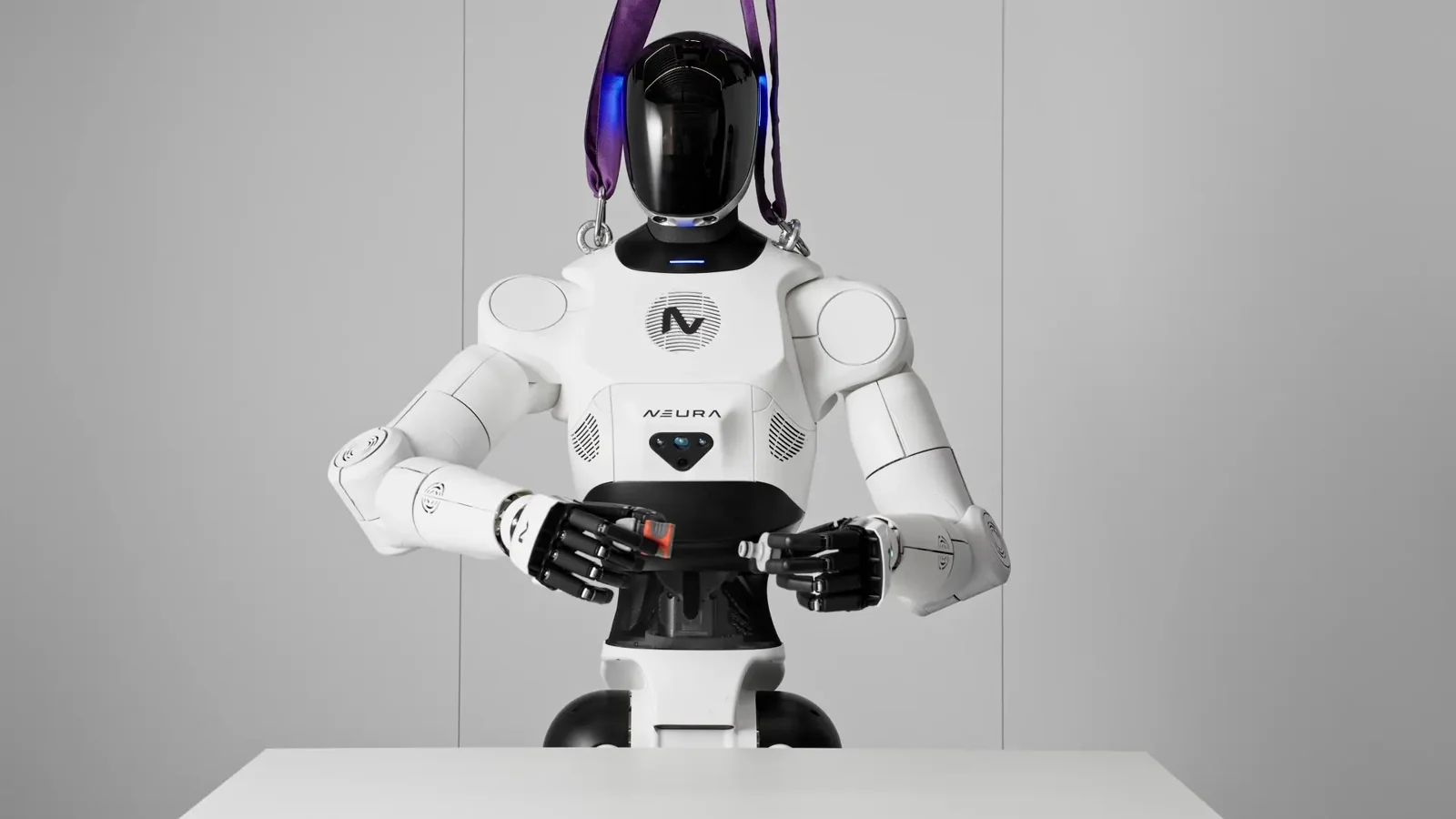
This week: NEURA’s multimodal robot model; Physical Intelligence’s hosted API beta; Mobo’s planned 21 October debut; Shanghai’s 2028 humanoid target; and the planned 2 November vote on Agility’s merger. Announcements and targets are distinguished from completed deployments.

Events · RoboBusiness

RoboBusiness 2026 runs on 20–21 October in Santa Clara

RoboBusiness 2026 takes place at the Santa Clara Convention Center on 20–21 October, local US dates. The organiser lists keynotes, exhibits and conference sessions. Topics include humanoids and Physical AI; consult the official schedule for programme times.

Photo: Kodama

Business · Kodama

Kodama raises $7 million for forestry automation

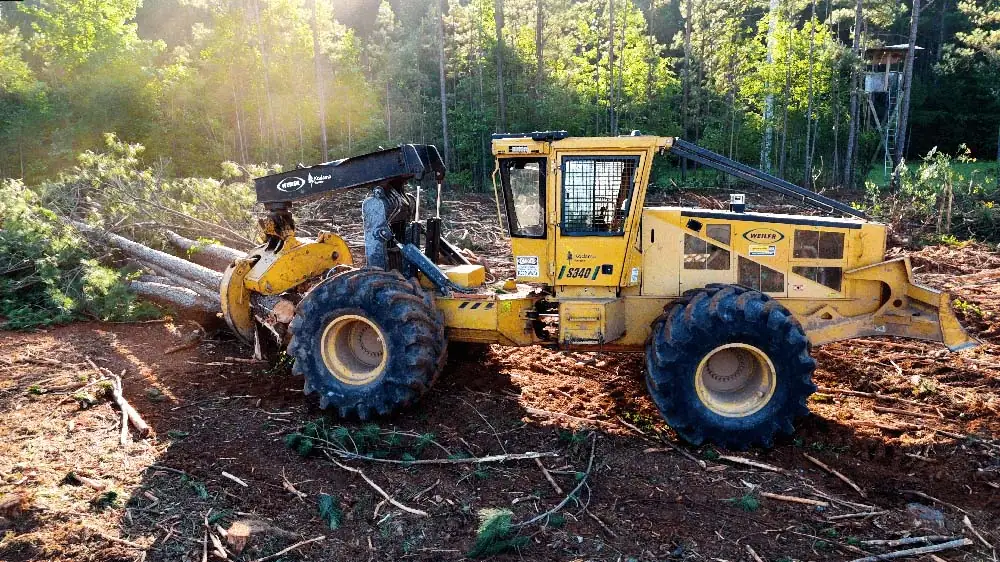
Kodama announced $7 million led by Konvoy and Breakwater, taking total funding to $14 million. Its forestry systems combine supervised autonomy with remote operation. The company reports moving more than 100,000 tons of timber over six months; that operating figure is company-reported.

Business · Gewu Tongzhi

Gewu Tongzhi reportedly raises nearly RMB 100 million

TechNode reported that Hangzhou robot-AI startup Gewu Tongzhi raised nearly RMB 100 million in angel funding. Founded by former Huawei engineer Cai Jia, it develops AI for dexterous manipulation. Initial deliveries are targeted for late 2026, with proof-of-concept work in textiles, optical modules and automotive components.

Humanoids · Figure AI

Figure CEO reports 348 miles in a nine-day treadmill test

Figure founder Brett Adcock said on October 19 that a Figure 03 walked 348 miles and 1.2 million steps over nine days on a treadmill. The claim is based on his post and has not been independently verified. The test duration does not establish battery life, uninterrupted operation without maintenance or performance at customer sites.

Policy · 중국 상무부

China's nine-agency commerce policy outlines new robot uses

China's Ministry of Commerce and eight other agencies published a policy opinion on October 19, dated October 13. It calls for more smart products including robots and broader embodied-AI use in home services and commercial logistics. The document sets a direction rather than a quantified deployment target; a reported stock move is not evidence of its effect.

Photo: 트위니 / 로봇신문

Logistics Robots · Twinny · The Prime Group

Twinny and The Prime Group team up on driverless forklifts

Autonomous robot company Twinny signed an MOU with The Prime Group, a logistics automation firm built around autonomous forklifts, to jointly commercialise driverless forklifts for warehouses and factories. Their first target is floor-level pallet transfer, moving pallets on a warehouse floor to where they are needed. Twinny brings autonomous navigation software that works without extra guidance infrastructure, while The Prime Group brings turnkey automation from process analysis to installation and operation, plus physical AI. Detailed roles and terms will be agreed separately.

Photo: 티로보틱스 제공자료 / 로봇신문

Autonomous Manufacturing · T-Robotics

T-Robotics joins a 10.2 billion won physical AI autonomous manufacturing project

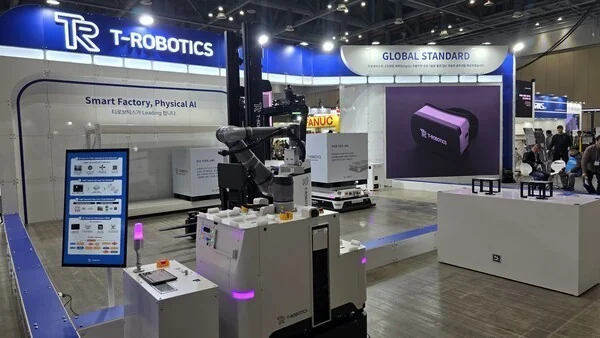
Humanoid and industrial robot company T-Robotics is taking part in a government project to develop a physical AI-based system for fully unmanned operation and predictive maintenance in the curing process for optical modules. The project is part of the ministry of industry's machinery and equipment technology development programme, with 10.2 billion won of government R&D funding through December 2029. T-Robotics, a large Korean company and KAIST are among the participating industry, academic and research institutions. The goal is to automate the optical module curing process and to predict equipment faults from equipment and process data.

Photo: MassRobotics

Start-up Programme · MassRobotics

MassRobotics opens applications for its healthcare robotics start-up programme

MassRobotics is taking applications for Cohort 6 of its Healthcare Robotics Startup Catalyst Program. The four-month, non-equity programme runs from February to June 2027 and ends with company showcases at the Robotics Summit & Expo in Boston. Applications close on 31 December 2026, and start-ups worldwide from seed to Series C are encouraged to apply. Since 2021 the programme has mentored 35 start-ups, and Intel joined its steering committee this year.

Trade Show · KIRIA

FIX 2026 humanoids: manufacturers and the evidence available

FIX 2026 runs on 21–24 October 2026. The reviewed evidence identifies Nami with Neuromeka, IGRIS-C with ROBROS and AI Worker with ROBOTIS. The original irobotnews article 48989 supports Nami only and is not evidence for all four models. The maker of MCR-1A remains unverified. See Sanup Ilbo 246398 for IGRIS-C and irobotnews 48870 for AI Worker.

Policy · 중국 시장감독관리총국

China publishes six humanoid robot standards effective April 2027

China's market regulator approved the country's first six national standards for humanoid robots, according to state media. Five set technical requirements and one covers simulation testing platforms. The standards take effect on April 1, 2027; publication does not mean every robot already complies.

Photo: 브릴스 / 로봇신문

AMR · BRILS

BRILS moves AMR production to Michigan after US Covered List rule on foreign robots

After the US Federal Communications Commission (FCC) added foreign-made advanced robots to its Covered List in July, Korean AMR maker BRILS is moving to local production at its subsidiary BRILS USA LLC in Grand Rapids, Michigan. According to the article, new models on the list in principle cannot obtain the FCC authorisation needed to sell or import them in the US. BRILS will start by assembling and producing forklift-type and low-profile AMRs and build a US parts supply chain through local partners. Its US exports in the first half of this year were about $3.71 million, 41.3% of total sales.

Photo: CMR Surgical

Medical Robots · Stryker · CMR Surgical

Stryker invests about $400 million in surgical robot maker CMR Surgical

Stryker invested about $400 million in CMR Surgical, a surgical robot company based in Cambridge, UK, and gained an exclusive option to acquire all of its remaining equity. Stryker becomes the exclusive US sales agent for the Versius portfolio, while CMR keeps leading development and sales outside the United States. According to CMR, Versius has been adopted in hospitals in more than 30 countries and used in 45,000 cases. The transaction is subject to regulatory approvals and customary closing conditions.

Photo: 현대모비스 / 로봇신문

Robot Parts · Hyundai Mobis

Hyundai Mobis holds its first robotics open-innovation day in China

Hyundai Mobis held its Mobis Mobility Day (MMD) on robotics and physical AI in Shanghai on 14 October. The company has run the event regularly in Silicon Valley, and this was the first time it was held in China. About 300 people attended, including local start-ups, carmakers and investors, with interest boosted by Mobis disclosing a humanoid actuator order earlier this year. Mobis plans to widen its robotics partner network by finding partners, running proofs of concept and moving to strategic collaboration and commercialisation.

Photo: 한국생산기술연구원 / 로봇신문

Humanoid Data · KITECH

KITECH builds a whole-body motion data platform for training humanoids

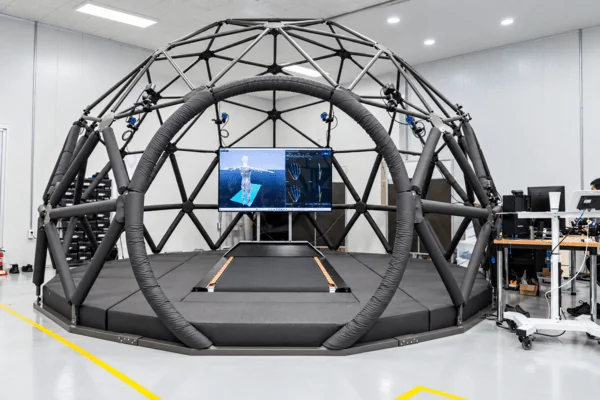
The Korea Institute of Industrial Technology (KITECH) has built HHIP, the Human-to-Humanoid Intelligence Platform, which records human movement from head to toe. Optical motion-capture cameras surround a high-speed treadmill inside a dome, and data from floor force plates, glove sensors and EMG sensors is aligned and stored on a single timeline. The treadmill reaches 45 km/h, fast enough to measure full-speed running in a wearable robot. The team used the platform to validate its AirKnee knee wearable robot and is now collecting human work motions for developing humanoid control models.

Industry Association · Korea AI & Robot Industry Association

Hyundai Motor and Qualcomm join the Korea AI & Robot Industry Association board

The Korea AI & Robot Industry Association named Hyundai Motor Company as a vice-chair member and Qualcomm Technologies as a board member at a recent board meeting. Semiconductor packaging company STATS ChipPAC Korea joined as a regular member. With the new members, the association plans policy proposals, more proof-of-concept projects for AI and robots, support for overseas expansion and cross-industry collaboration. The association's ROBOTWORLD 2026 runs from 4 to 7 November.

Photo: 휴로틱스 제품 이미지 / 로봇신문

Wearable Robot · Hurotics

Soft exosuit maker Hurotics raises 25 billion won Series A

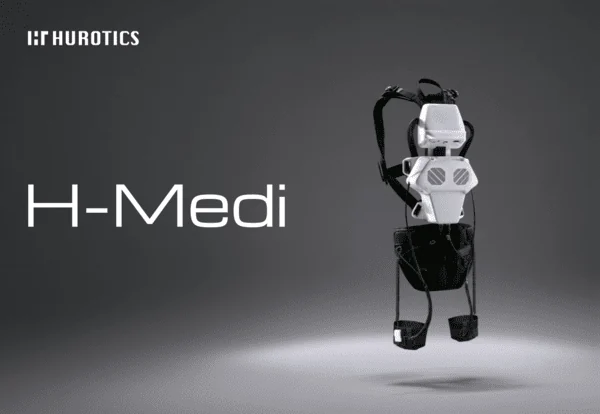
Soft exosuit maker Hurotics raised a 25 billion won Series A led by Atinum Investment, bringing its total funding to more than 33.5 billion won. New investors include strategic investors Daewoong, Naver and Lotte, as well as the Industrial Bank of Korea. Its main product, H-Medi, is a soft exosuit for gait rehabilitation certified as a Class 2 combination medical device by Korea's Ministry of Food and Drug Safety, and has been used at hospitals including Sinchon Severance since its commercial launch in September 2025. The money will go to overseas approvals and distribution for H-Medi and to developing and mass-producing H-Care, an everyday walking-assist robot.

Photo: Agility Robotics

Humanoid · Agility

Agility picks Nyobolt fast-charging batteries for Digit 5

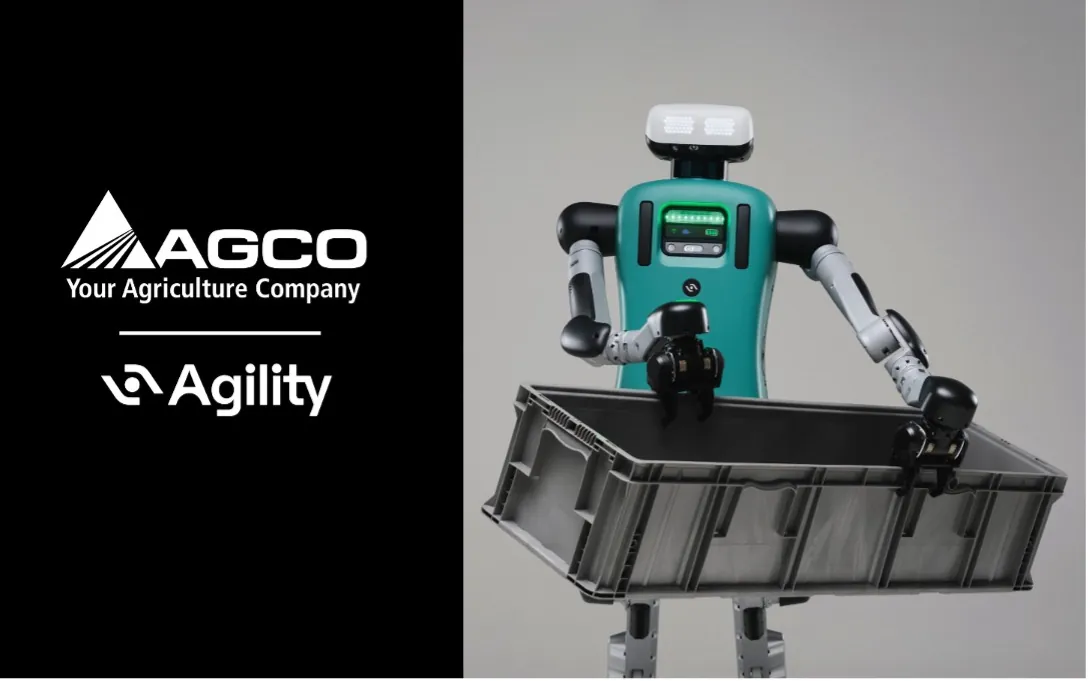
Agility Robotics named Nyobolt as the battery technology provider for Digit 5, its humanoid designed to work close to people. The new battery system targets 90 minutes of runtime and a 9-minute charge, a 10:1 run-to-charge ratio, up from Digit 4's 2:1. Agility says this lets Digit work more than 20 hours in a 24-hour day, with early access to Digit 5 on Nyobolt batteries expected in the first half of 2027. The company also says its business combination with Churchill Capital Corp XI is expected to close in the fourth quarter of 2026, after which it is expected to trade on Nasdaq as AGLT; it is not listed yet. Follow-up checked 19 October: the company says the S-4 became effective on 13 October, with a merger vote scheduled for 2 November. Trading as AGLT is conditional on approval and closing; SEC effectiveness is not an investment endorsement. On 19 October, Agility announced that Mark Vale is expected to join the board and chair the audit committee after the merger closes. Bruce Leak and Matt Ocko stepped down. More than 65,000 real-world Digit operating hours is a company-reported figure, not confirmation that the listing has completed.

Trade Show · ROBOTWORLD 2026

ROBOTWORLD 2026 runs 4–7 November at KINTEX with 390 exhibitors

ROBOTWORLD 2026, Korea's largest robot show, runs from 4 to 7 November at KINTEX in Goyang. According to the Korea AI & Robot Industry Association, this year's show has 390 companies from 17 countries and 1,150 booths, up from 365 companies from 13 countries last year. New humanoid and food-tech pavilions are planned, and 16 humanoid companies are taking part. The International Robot Business Conference on 4–5 November covers manufacturing AI transformation, physical AI humanoids and mobility.

Photo: Maeil Business Newspaper

Regulatory Sandbox · Maum AI · Robros

Korea approves first quadruped patrols on footpaths and factory tests for 20 humanoids

At its sixth industrial convergence regulatory sandbox committee of the year on 13 October, the Korean government approved exemptions for robot field tests. Maum AI's quadruped robot will run the first patrol tests on pedestrian paths, along riverside trails and in parks in Cheonan. Twenty Robros humanoids will be tested close to workers at Nepes, Sungwoo Hitech, HD Hyundai Samho and Delivery Lab, covering chip, car, shipbuilding and logistics sites. Newspim reports a plan to raise the physical AI budget from about 900 billion won in 2026 to 3.1 trillion won in 2027, more than threefold; it is a budget plan, not an approved budget.

Photo: Promise Robotics

Construction Robots · Promise Robotics · D.R. Horton

Promise Robotics robot factories to produce more than 1,250 homes for D.R. Horton

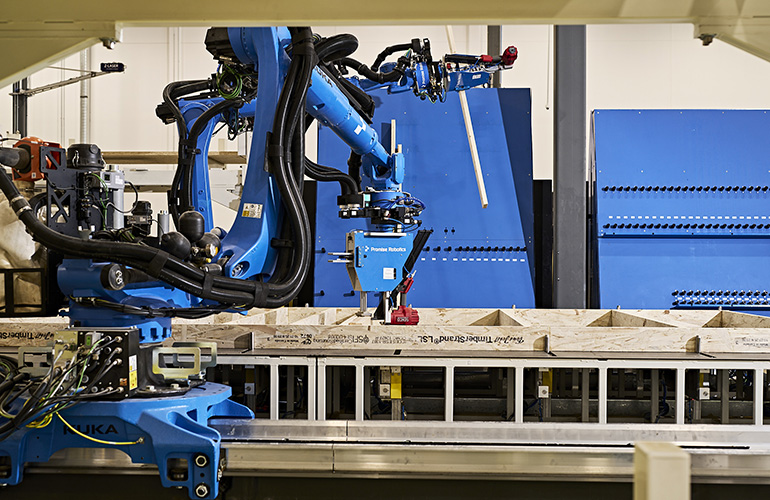
Toronto-based Promise Robotics signed a multi-year agreement with D.R. Horton, the largest US homebuilder by volume, which will use its Factory-as-a-Service (FaaS) model to produce more than 1,250 homes in the United States. The company turns home designs into robotic instructions and uses KUKA industrial arms to make wall, floor and stair components. Co-founder and CEO Ramtin Attar said it can build a two-storey, two-family home with a basement and garage in one day, excluding electrical, window and plumbing work. Its first FaaS facilities are being set up in Edmonton and Calgary in Canada and in Phoenix.

Photo: Intuition Robotics

Care Robot · Intuition Robotics · NYSOFA

New York State extends ElliQ companion robot programme with a three-year deal

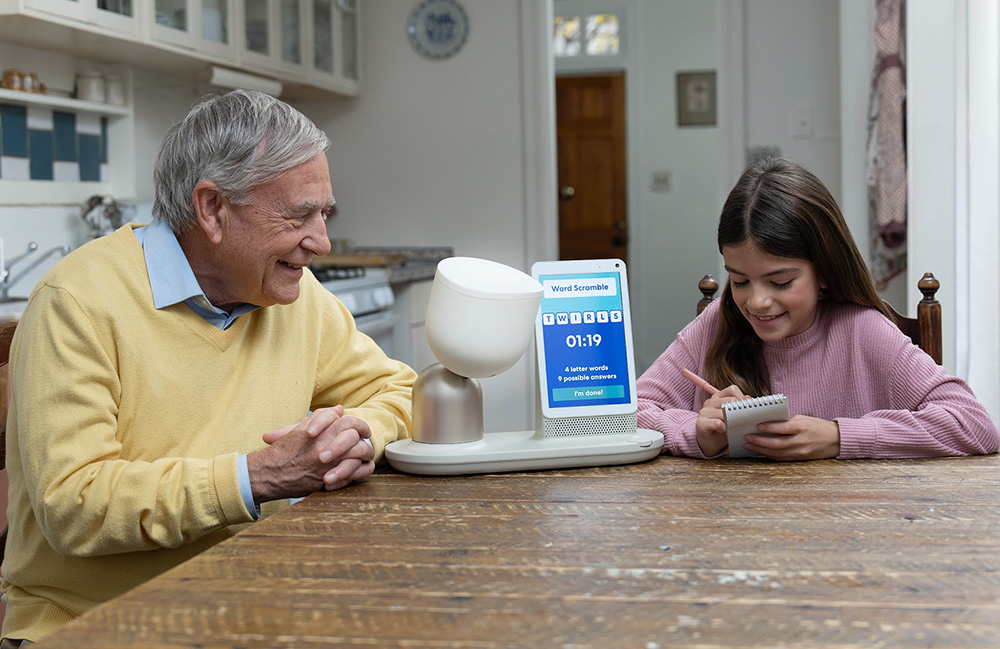
The New York State Office for the Aging (NYSOFA) signed a new three-year, $2.1 million agreement with Intuition Robotics to keep providing its ElliQ AI companion robot to older New Yorkers. Since the programme launched in 2022, hundreds of older adults in New York have received ElliQ, and more than 3,500 applied in 2025 alone. In 2026 programme data, 94% of users said they felt less lonely, and users interacted with ElliQ 48 times a day on average (company figures). Intuition Robotics, founded in 2016, is based in Ramat Gan, Israel.

Photo: Fortune

Investment · Ultra · Physical Intelligence

Warehouse packing-robot start-up Ultra raises $62 million

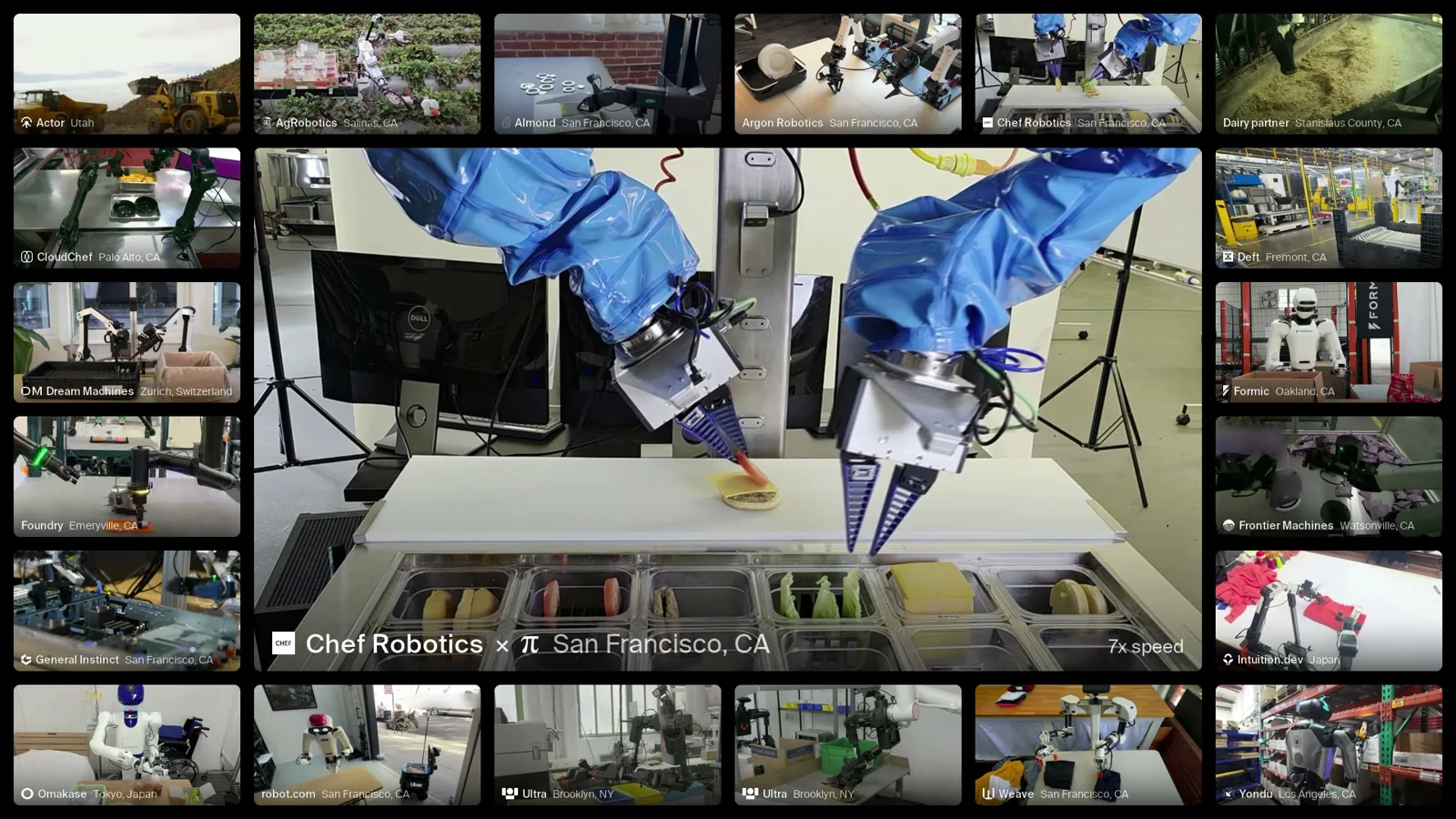
Ultra, a Brooklyn-based start-up that leases warehouse packing robots under a robots-as-a-service model, announced it has raised $62 million. The total combines a $50 million Series A led by Framework Ventures and an earlier $12 million seed round led by Y Combinator and Next View. Customers pay an up-front integration fee and then a monthly fee for ongoing hardware and software support. Ultra builds the robots, while Physical Intelligence supplies the AI that lets them learn each customer's set-up.

Wearable Robot · Hanyang Univ. · Hyundai Kia

Brain signals and a wink control a wearable walking robot

A Hanyang University biomedical engineering team and the Hyundai Motor and Kia Robotics Lab controlled the X-ble MEX wearable walking robot in real time with a hybrid brain–computer interface. Users choose an action by looking at it in augmented-reality glasses, confirm it with a wink and cancel it by clenching their teeth. In tests with 10 healthy adults, brain-signal action selection averaged 95.06% accuracy. The study was published in IEEE Transactions on Neural Systems and Rehabilitation Engineering.

Business · Mecka AI

Mecka AI raises $60 million for robot training data

Mecka AI raised a reported $60 million Series B led by Sequoia, with Nvidia and Samsung among the backers. It converts first-person video and sensor recordings of human work into robot training data. Its claimed $100 million annual revenue run-rate is not the same as realised annual revenue.

Photo: 투모로 로보틱스 / 로봇신문

Robot AI · Tomorrow Robotics

Tomorrow Robotics unveils robot foundation model HABILIS Brain 0

Tomorrow Robotics unveiled HABILIS Brain 0, a robot foundation model that turns an understanding of the scene and the task instruction into grasping and moving actions. On the LIBERO simulation benchmark, the base GC-VLA model scored a 95.20% success rate, and the final model with GCRF, which corrects actions using success and failure experience, scored 99.55%. In a logistics picking demo on Rainbow Robotics' RB-Y1, it picked and moved items from a box 400 times in a row without failure. The company plans field tests in manufacturing and logistics under agreements with Rainbow Robotics and Robotis.

Reported Investment · Figure AI · NVIDIA

Nvidia reportedly discussed another $1 billion investment in Figure

The Information reported on 7 October that Nvidia has discussed investing about another $1 billion in Figure AI. According to the report, Figure is seeking new financing at a pre-money valuation of around $38 billion, and no deal has been agreed. Neither company has announced the investment, and Figure's own news page carries no such announcement. The often-cited $39 billion is the post-money valuation from Figure's Series C in September 2025.

Industry & logistics · AWS · NVIDIA

AWS introduces Physical AI Toolchain for robotics development

AWS introduced Physical AI Toolchain in its official blog on 7 October 2026. It combines reference architectures, infrastructure code and deployment automation across data collection, training, simulation validation and deployment, integrated with NVIDIA's physical AI stack. Publicly available tooling does not imply free cloud compute.

Business · Multiply Labs

Multiply Labs raises $75 million for robotic biomanufacturing

Multiply Labs raised a reported $75 million Series B led by NantWorks, with AstraZeneca and Teradyne among the participants. It automates repetitive steps in biological drug manufacturing. A 74% cost-per-dose reduction and up to 100-fold throughput are company claims, not universal validated outcomes.

Photo: Minerva Humanoids / 경향신문

Humanoids · Business · Minerva Humanoids

Minerva introduces remotely operated humanoid Roger for hazardous work

Minerva Humanoids announced approximately $10 million in pre-seed funding and its semi-autonomous humanoid Roger on 6 October 2026, according to its company release. A specialist operates it remotely through a VR headset while its AI handles balance, fall recovery and navigation. It targets hazardous energy and public-safety work; this is not evidence of completed large-scale deployment.

Photo: Robotics 24/7

Robot Parts · Cognex · RealSense

Cognex agrees to buy depth-camera maker RealSense for about $500 million

Machine vision company Cognex signed a definitive agreement to acquire RealSense, a maker of depth cameras for robot perception, for about $500 million. It will pay entirely from existing cash, and the deal is expected to close in the fourth quarter of 2026, subject to regulatory clearance. RealSense, founded inside Intel in 2014 and spun out in 2025, says it expects 2026 revenue of $80 million to $90 million. Before closing, its facial authentication product line will be spun out as an independent company.

Photo: The Robot Report

Reported Robot AI · SoftBank · RAI Institute

SoftBank reportedly agrees to buy the RAI Institute from Hyundai Motor Group

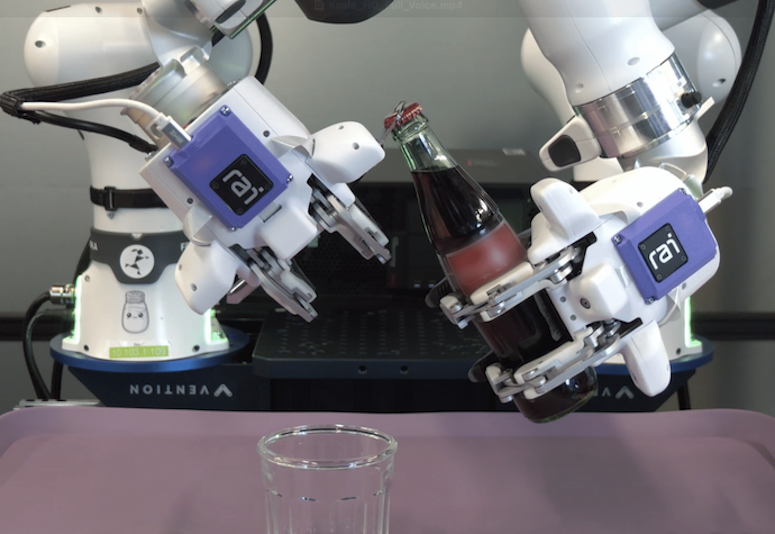
Citing multiple sources, The Robot Report says SoftBank has agreed to acquire the Robotics and AI Institute (RAI) from Hyundai Motor Group. Financial terms are unknown, and the deal is being reviewed by the Committee on Foreign Investment in the United States (CFIUS). RAI was founded in 2022 by Boston Dynamics founder Marc Raibert, with an initial investment of more than $400 million from Hyundai. Neither RAI nor SoftBank has announced the deal.

Safety recall · Wybotics

CPSC recall covers about 5,000 Wybotics pool vacuums

The US CPSC announced a recall of about 5,000 Wybotics Osprey 700 Max and S1 pool vacuums on 9 April 2026. Ten overheating or fire reports included nine property-damage incidents and no reported injuries. Owners of affected serial numbers should stop use and contact Wybotics for a free WYBOT C2 replacement; Korean availability and recall coverage are unverified.

Photo: Aiper / GadgetGuy

Home robot · Aiper

Aiper announces Scuba V3 Ultra and Scuba V3 pool robots at CES 2026

After CES 2026, GadgetGuy reported more details on Aiper's new outdoor range: the Scuba V3 robotic pool cleaners, the IrriSense 2 smart irrigation system and the EcoSurfer Senti pool skimmer. The Scuba V3 Ultra and EcoSurfer Senti were named CES Innovation Awards Honorees. According to the article, the Scuba V3 Ultra schedules its own cleaning runs by recognising weather patterns, pool shape and how the pool is used, and combines cleaning and skimming in one cordless device. Citing the international press release, it lists US prices of US$2,299.99 for the Scuba V3 Ultra and US$1,099.99 for the base Scuba V3; Australian dates and prices were not confirmed, and Scuba V3 Pro pricing was still to be announced.

Photo: SamMobile

Pet robot · Samsung

Samsung Ballie consumer launch reported as shelved

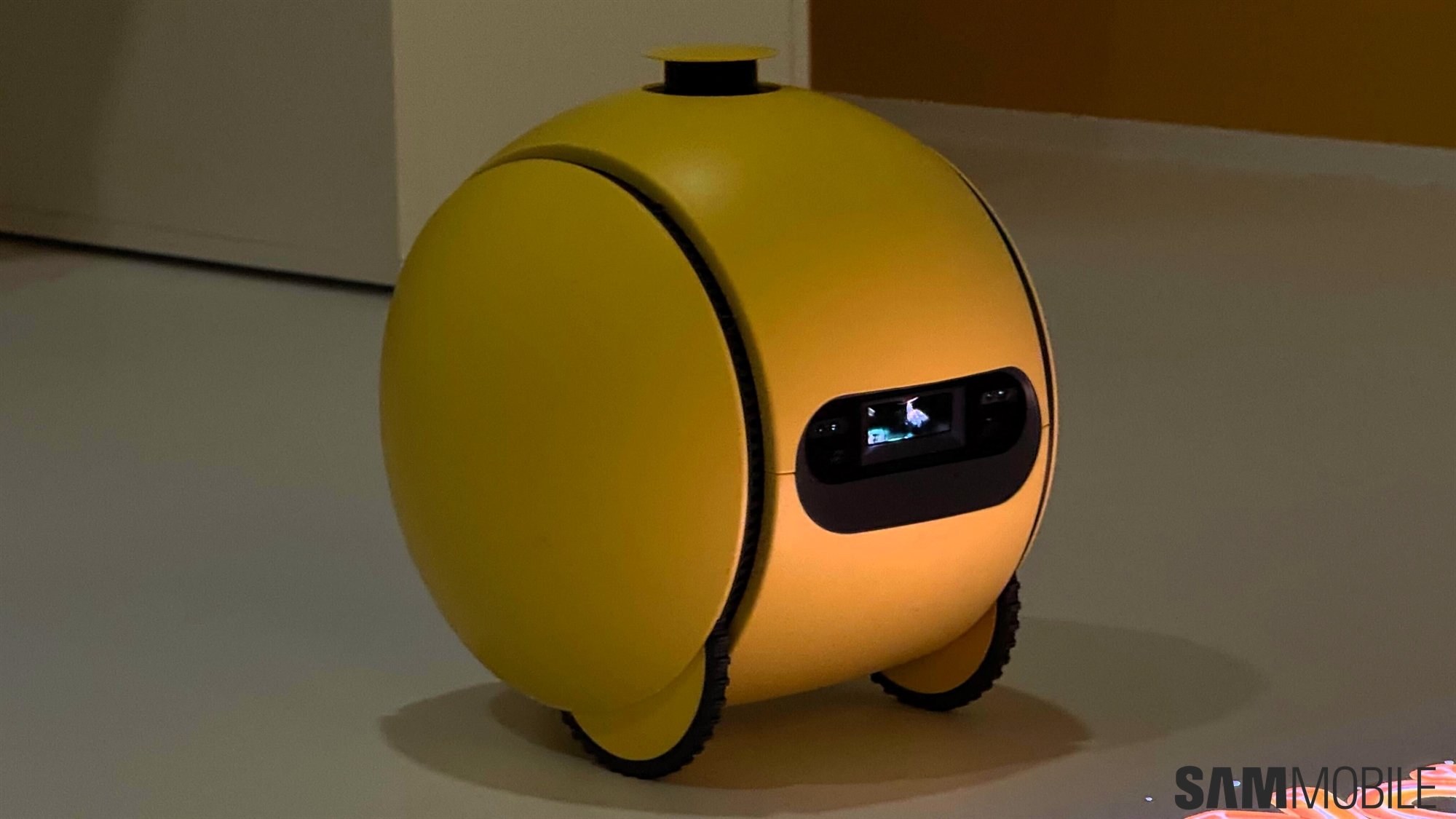
SamMobile reports that Samsung's Ballie home robot could be quietly heading for cancellation. Asked by Bloomberg about its status, Samsung called Ballie an "active innovation platform" within the company rather than a consumer device intended for release, without saying it was cancelled. Samsung had promised at CES the year before to launch Ballie by the end of 2025, but missed that deadline and did not show it at IFA 2025. The article says what Samsung learned from Ballie has been applied to new products such as the Jet Bot Steam Ultra.

Home robot · iRobot

iRobot enters pre-packaged Chapter 11; Picea to take ownership

iRobot, the maker of Roomba, entered a Restructuring Support Agreement with its secured lender and primary contract manufacturer Picea, under which Picea would acquire iRobot through a court-supervised process. iRobot and certain affiliates began a pre-packaged Chapter 11 process in the District of Delaware, which the company expects to complete by February 2026. Picea would receive 100% of iRobot's equity, and iRobot said it expects to keep operating without disruption to app functionality, customer programs or product support. Once complete, iRobot expects to be a private company wholly owned by Picea, its stock would no longer be listed on Nasdaq, and common shareholders are expected to receive no equity.

Photo: 1X announcement

Humanoid · 1X

1X opens orders for the NEO home humanoid

1X announced NEO, a humanoid robot for the home that it calls consumer-ready, and opened pre-orders. NEO can work through a scheduled list of chores such as folding laundry, organising shelves and tidying, and owners can book a 1X Expert to guide it through tasks it doesn't know yet. 1X says it weighs 66 lb (29.94 kg), can lift over 150 lb (68 kg) and carry 55 lb (24.95 kg), and has 22-DoF hands and a 22 dB noise level. Early Access costs $20,000 with priority delivery in 2026, while a $499/month subscription ships later; deliveries start mainly in the US in 2026, with other markets from 2027.

Photo: Figure

Humanoid · Figure AI

Figure introduces Figure 03

Figure introduced Figure 03, its third-generation humanoid, with hardware and software redesigned from the ground up for its Helix vision-language-action AI, for the home and for high-volume manufacturing. The new camera system offers twice the frame rate, a quarter of the latency and a 60% wider field of view per camera, each hand has a palm camera, and in-house fingertip sensors detect as little as three grams of pressure. For the home it adds soft, washable textiles, 9% less mass than Figure 02, and 2 kW wireless inductive charging through coils in its feet. Figure says the first line at its BotQ facility can initially build up to 12,000 humanoids a year, with a goal of 100,000 robots over the next four years.

Photo: Interesting Engineering

Humanoid · Unitree

Unitree unveils the R1 humanoid at 39,999 yuan

Hangzhou-based Unitree Robotics unveiled the R1, a humanoid with 26 joints priced at 39,999 yuan (about US$5,900). Company videos showed it cartwheeling, running downhill and quickly getting up from the ground, and Unitree says it is aimed at individual developers and early-stage research teams rather than hobbyists. The article compares it with Unitree's G1, which starts at 99,000 yuan (US$13,800), and notes that H1 and G1 units are in pilot use on assembly lines at EV makers Nio and Geely. Citing SCMP, it also reports that the launch came days after Unitree filed tutoring documents with Chinese regulators, an early step toward a planned IPO.